THE GERMAN SHOOTING MUSEUM –
October 23, 2026
Preserving And Presenting Marksmanship History
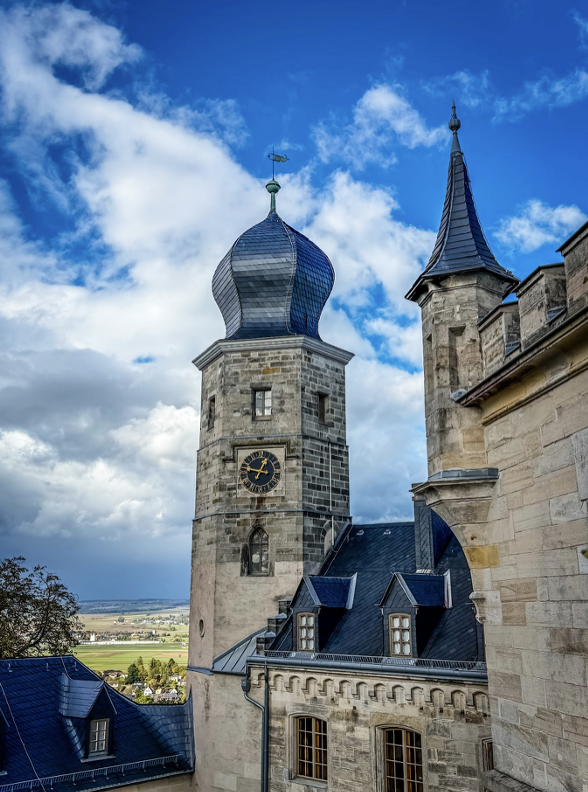
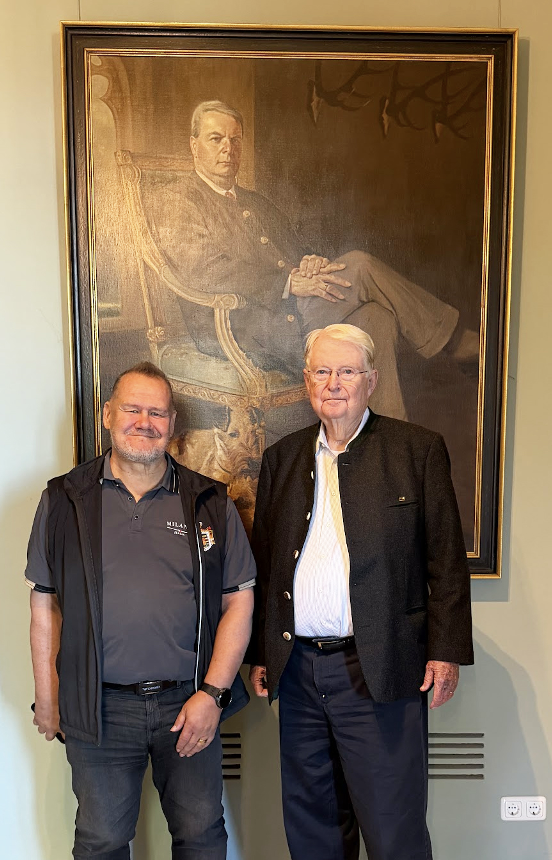
During a recent family vacation trip in Germany, we spent the better part of one day visiting the German Shooting Museum in Coburg (https://www.schloss-callenberg.com/german-shooting-museum/). This is a quality museum that is fulfilling a mission of preserving and presenting marksmanship history, especially as it was practiced in German speaking lands. Because this mission is important to all shooting enthusiasts, I thought it would be worthwhile for me to prepare this report to tell CMP shooting enthusiasts about this unique museum and its efforts to celebrate our sport. Our gracious host and guide during this visit was Thomas Lessig, a member of the Museum and Callenberg Castle staff. We are grateful for the hospitality Mr. Lessig extended to us.
– Gary Anderson DCM Emeritus
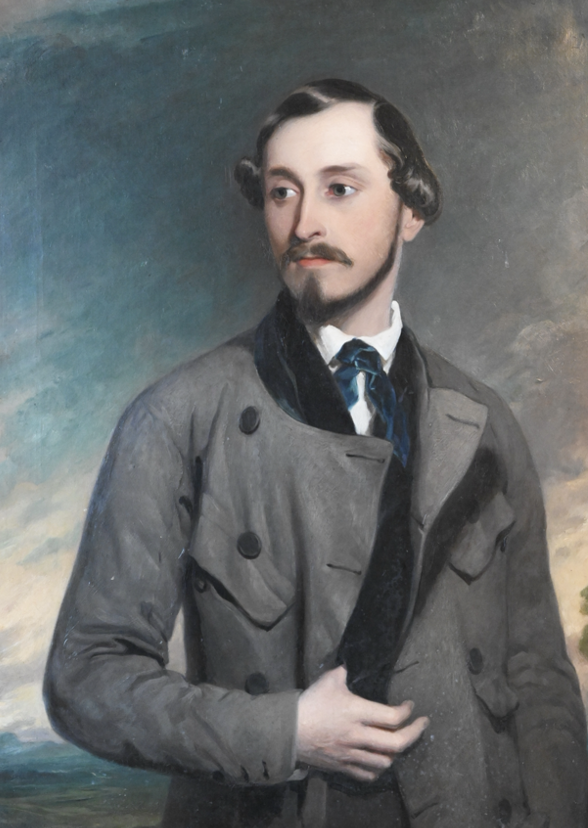
The German Shooting Federation (DSB) was founded in 1861, largely through the personal efforts of Duke Ernst II, who was the head of the German Royal House of Sachsen-Coburg and Gotha. The German Federation founding took place during the same period as the founding of the British NRA in 1859 and the National Rifle Association of America in 1871, but for very different reasons. The British and American federations were established to foster military preparedness through rifle marksmanship competition. The German Federation, in contrast, was founded to unify all German shooting clubs in the then separate German states and free cities. German shooting clubs were, in fact, united into one national federation before the separate German states were united into one nation.
During the 1850s and 1860s when German politics struggled with how to unite the German states, Duke Ernst II of Sachsen-Coburg and Gotha, believed that if German shooting , together with the German gymnast and singing clubs, could unite into unified German organizations, that this could help promote national political unity. Chancellor Bismarck did indeed succeed in organizing the German states into a unified nation in 1871.
The German House of Sachsen-Coburg and Gotha traces its origin back to the end of the 10th century. A predecessor House of Ernestine Saxony played a key role in the Protestant Reformation of the 16th century; Elector Frederich the Wise and his son John and grandson John Frederich were protectors of the Reformation. This family acquired a direct connection with shooting in the late 16th century when Elector John Frederich’s grandson Duke Casimir, who was a shooter himself, became a leader of the Coburg Shooting Club. In the 19th century, Prinze Albert, who was a member of this family, was a marksman who once won a shooting festival prize in Gotha. He is famed for marrying British Queen Victoria in 1840. When the German Shooting Federation was founded in 1861, the head of this royal House took on the ceremonial role of “Protektor” of the Federation.
The House of Sachsen-Coburg and Gotha provided another important link to the German Federation. The German Federation had a shooting museum in Nürnberg before World War II, but the Nazi government closed it in 1936 when they shuttered shooting clubs and sports organizations throughout Germany. The impetus for a new German Shooting Museum came from a former Federation President, Josef Ambacher of Munich. He felt that the history of German shooters and their traditions must be preserved and made available to the public and that a shooting museum was an essential way to do that. When the Federation began looking for a site where they could reestablish a shooting museum, Prince Andreas, who was then the head of the Royal House offered the family’s Callenberg Castle near Coburg as a museum site. The new Deutsches Schützenmuseum opened there in 2004.
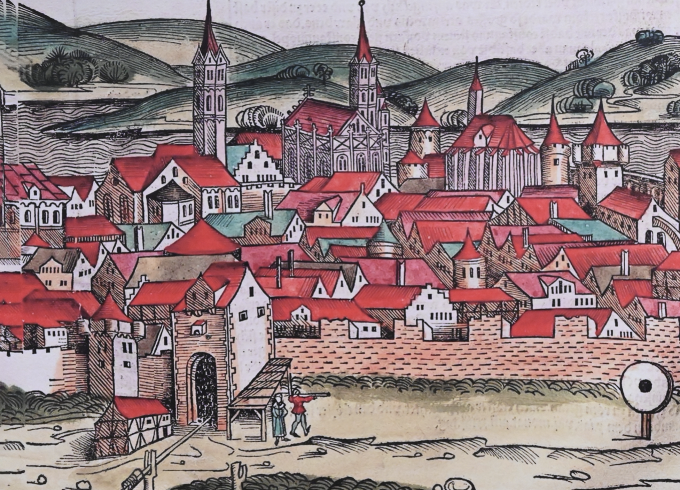
The Museum occupies three floors of one wing of the castle. Museum displays begin with an explanation of marksmanship history that goes back to the Stone Age. A 3-story tall pole at the entrance is topped with a large wooden eagle. One of the first forms of target shooting was shooting a bow and arrow or crossbow at a bird tied to a tall pole—whoever shot the bird off the pole was the winner. A display for when this continuum reached the 12th and 13th centuries focuses on the formation of the early German shooting clubs. Those first clubs were formed after the cities began to establish shooting ranges where citizens could shoot their crossbows. The purpose was to prepare them to defend their city. The display describes how these practice sessions became social occasions that evolved into organizing shooting clubs and how those shooting clubs began to conduct shooting festivals where they invited participants from neighboring cities.
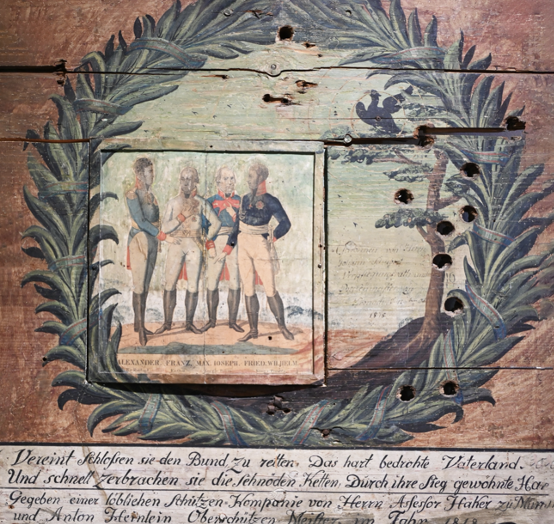
One of the unique features of German shooting clubs is their use of painted wooden targets to celebrate special occasions. Museum displays include an impressive collection of these targets. They are fascinating because they commemorate important events in the history of the shooting club, the club’s city and even national events.
The earliest targets were square or round slabs of wood. In festival contests, shooters shot one shot. After each shot, a target marker placed a numbered wooden peg in the shot hole. When everyone had fired their shots, the one whose shot was closest to the center or to a designated point on the target was the winner.
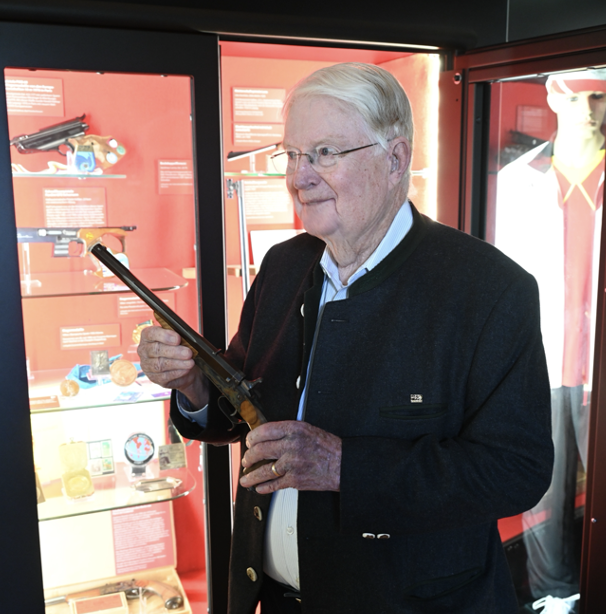
The Museum also has several fascinating special exhibits. One room is dedicated to the Olympic Games with torches, mascots and memorabilia. One exhibit is dedicated the German Federal Shooting Festivals (Bundeschießen). These were massive shooting festivals, often involving the construction of huge shooting ranges and exhibition facilities. They were attended by thousands of shooters. Of special interest was a display of guns used in significant shooting victories. Those include the rifle used by Peter Kohnke to win an Olympic gold medal in 1960 and the air rifle used by Gerd Kummet to win the first world air rifle championship in 1966. An especially noteworthy item was a .44 cal. pistol used by the founder of the modern Olympics, Baron Pierre de Coubertin. de Coubertin was a marksman who had won a French national pistol championship. ISSF World Championship trophies that can no longer survive going home with victors are also on display at the Museum.
The German Shooting Museum in Callenberg Castle near Coburg, Germany is a museum well worth visiting if you are traveling anywhere near the middle part of Germany. A careful pass through this museum will yield a new appreciation for the origins of the shooting sports that we all enjoy and love.
Great write-up and informative article about the shooting sports, as only Gary Anderson can deliver. I have a trip to Germany scheduled for December, and a free weekend may find me visiting the museum, if time allows.