A CALL FOR THREE-POSITION RIFLE RULE RECOMMENDATIONS
August 14, 2026
A New Three-Position Air Rifle Rulebook is Due for Release in September
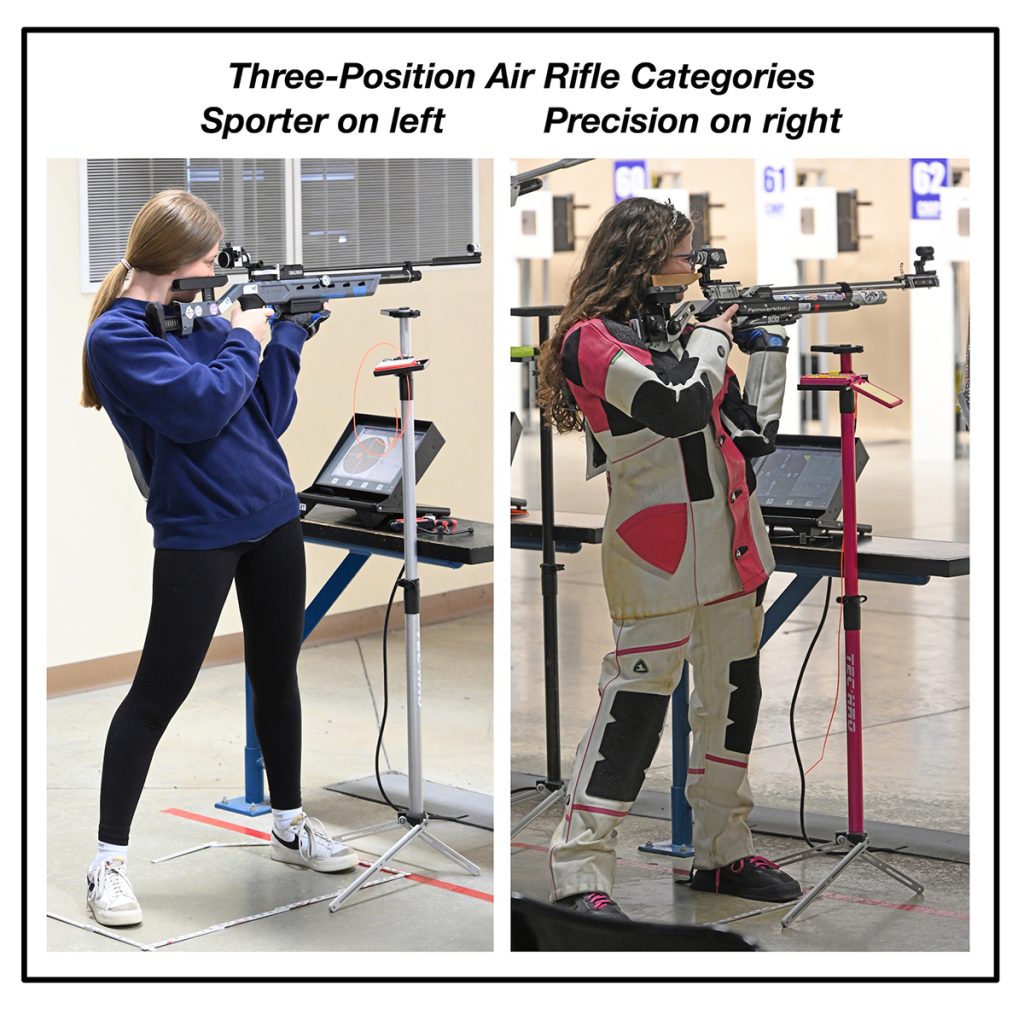
Three-Position Air Rifle shooting has become the most popular Junior rifle competition in the USA. Three-Position Air Rifle competitions are limited to school-age Juniors who have not yet graduated from high school. There are competitions in two categories, Sporter Class for competitors whose air rifles are limited in cost and weight and who must shoot in ordinary sports clothing, and a Precision Class, for competitors who use Olympic and international class air rifles and wear specialized shooter clothing.
The current Three-Position Air Rifle competition year cycle coincides with the school year. New athlete training as well as JROTC postals and the Scopos National (Virtual) Leagues begin in the fall. Major shoulder-to-shoulder competitions begin in December and continue into the new year. Major National Championships begin in March with the JROTC Nationals conducted by the CMP. CMP and American Legion Championships conclude the competition season in the summer.
Three-Position Air Rifle competitions are currently governed by the 15th Edition 2024-2026 National Standard Three-Position Air Rifle Rules. The National Three-Position Air Rifle Council, which decides these rules, is comprised of representatives of organizations or firms that conduct three-position air rifle events on a national basis. Council members include the CMP, USA Shooting, the Army, Navy, Marine Corps and Air Force JROTC commands, the American Legion, Scopos Orion and Crosman Air Guns. The CMP acts as the Council’s program administrator by publishing its rulebook and administering its competition and awards programs.
Since many Juniors who compete in Three-Position Air Rifle also compete in USA Shooting competitions that are primarily governed by ISSF Rules, Three-Position Rules are closely coordinated with USA Shooting and ISSF Rules. Controversies arose in 2026 regarding how and whether to enforce new ISSF rules regarding rifle clothing stiffness and their revised three-position final. Decisions regarding these and other issues identified by CMP staff or submitted by coaches must be decided before the new rulebook is released.
The current 15th Edition 2024-2026 rulebook is due to be replaced by a 16th Edition 2026-2028 rulebook to be released in September of this year. The National Council rulebook revision process is taking place this summer and is being coordinated by the CMP. Anyone who participates or has an interest in Three-Position Air Rifle competition is invited to submit recommendations for rule changes or clarifications regarding rule interpretations for consideration by the Council during this rulebook revision process.
IF YOU HAVE A RECOMMENDATION FOR A THREE-POSITION AIR RIFLE RULE CHANGE OR CLARIFICATION, PLEASE SUBMIT IT TO: [email protected]
I would like to see the CMP‑sanctioned Postal 3PAR EIC reinstated. The COVID era proved how valuable these matches are for teams and for young athletes who simply cannot afford the travel costs or time required to attend in‑person 3PAR EIC events. This sport exists for our youth, and many of them struggle to find—and fund—enough opportunities to earn EIC points toward Junior Distinguished status within the short window they’re given.
Unlike adult competitors, juniors only have until the summer of their 18th birthday to achieve this status. Most do not earn their first point until around age 16, leaving them with barely two years to complete the requirement. Removing Postal EIC opportunities makes an already difficult path even more restrictive.
If the concern is that CMP does not fully trust team or range managers to conduct Postal EICs properly, then that issue should be addressed directly—without eliminating opportunities for our junior athletes. The solution should strengthen oversight, not reduce access.
Michael,
Thanks for your comment – I’ve forwarded it onto our Rules Committee and 3P Manager.
Christine
Your feedback regarding virtual EIC matches has been documented and brought before the 3PAR Council on multiple occasions. In fact, this topic has been revisited at several Council meetings as a result of your continued requests.
The Council has thoroughly discussed the issue and has consistently agreed that the current EIC program requirements should remain unchanged. The Council has also reviewed the number of Junior Distinguished Badges being awarded and determined that the current number is appropriate.
The Junior Distinguished Badge is intended to recognize an exceptional level of achievement in competitive marksmanship. While we want junior athletes to have opportunities to pursue this distinction, the badge is not intended to be earned by every competitor. Its significance comes, in part, from the challenge of achieving it.
We recognize that travel expenses and access to competitions can present challenges for junior athletes and their families. However, the Council believes that maintaining the standards and integrity of the EIC program is essential to preserving the value of the Junior Distinguished Badge.
After repeated discussion and consideration, the Council has consistently voted against reinstating virtual EIC matches. At this time, there are no plans to change the program.
We appreciate your continued interest in junior marksmanship and your advocacy for these athletes.
Would like to bid on a m1 in 223 or 5.56
Gerald,
Are you referring to the M14 rifles? Please visit our M14 landing page at https://thecmp.org/l/m14-announcement/
Thanks,
Christine
Dry firing is allowed under Rule 7.11 DRY FIRING
Dry firing is releasing the trigger mechanism on a cocked rifle without releasing a propelling charge (air or CO2). Athletes may dry fire during Preparation and Sighting, Changeover, Sighting and Record Fire Stages if a propelling charge is not released. Note: Not all air rifles are capable of dry firing when air or CO2 cylinders are attached.
Do you mean release of propelling charge?
I do not understand why it is prohibited. It is permitted at high power, and I see no potential harm. The scoring is straightforward: each successful hit on the target counts.
I would like to see dry-firing allowed after the recorded match starts. If a gun does not sound or function properly during the match a competitor should be able to dry fire their gun to test for/gain confidence in proper functionality