AIR GUN GAMES FOR FUN AND VARIETY
June 1, 2026
By Gary Anderson, DCME
The Air Rifle, Air Pistol and Junior Three-Position Air Rifle Shooting disciplines have their foundational 60-shot competition events, but Junior Shooting teams and clubs can make these already popular Shooting events even more attractive and exciting by augmenting them with Special Air Gun Shooting Games. Air Gun Games are events that were developed to fulfill specific Shooting Sports purposesThis On the Mark article describes five unique air gun games that Junior shooting teams or clubs could include in their programs to add variety and fun for their youth members and even help them appeal to broader community audiences.
Practice Finals, Best Center Shot contests, Target Sprint races and League shooting are games your team or club could use to enhance youth member experiences. Best Center Shot contests can be used to celebrate special occasions in the life of your team, club or community. Practice Finals, Target Sprint, Bench Rest Air Rifle and Target Sprint are excellent ways to engage local communities in your program. Conducting occasional Bench Rest Shooting events is an excellent way to promote public participation in the Shooting sports. Staging Target Sprint races can attract a new group of mostly young athletes to your program.
Air Gun enthusiasts should note that CMP Programs at the Gary Anderson Competition Center at Camp Perry, Ohio and Judith Legerski Competition Center in Anniston, Alabama already incorporate these Air Gun Games in their annual programs. In addition to conducting regular 60-shot Air Rifle and Air Pistol competitions, the CMP offers special air gun events during the annual National Matches at Camp Perry, as well as during weekly public shooting sessions at the two Competition Centers. Check the CMP website for more information (https://thecmp.org/air-gun-matches/).
This On the Mark article describes these special air gun events and how to conduct them. Instructions for conducting them are also published in the 2026 CMP Air Rifle and Air Pistol Competition Rules.
SHOOT PRACTICE FINALS
One of the best shooting games available to Junior teams and clubs that have electronic targets is to shoot Practice Finals. Shooting regular Practice Finals can be an enjoyable experience for youth members when everyone in the program can experience finals. Practice Finals can help train the team’s top athletes for the competitions where they may qualify for finals. Current rulebooks provide detailed guidance for setting up finals. Range Officer scripts for conducting finals can be downloaded from the CMP rulebooks website: https://thecmp.org/competitions/cmp-competitions-rulebooks/.
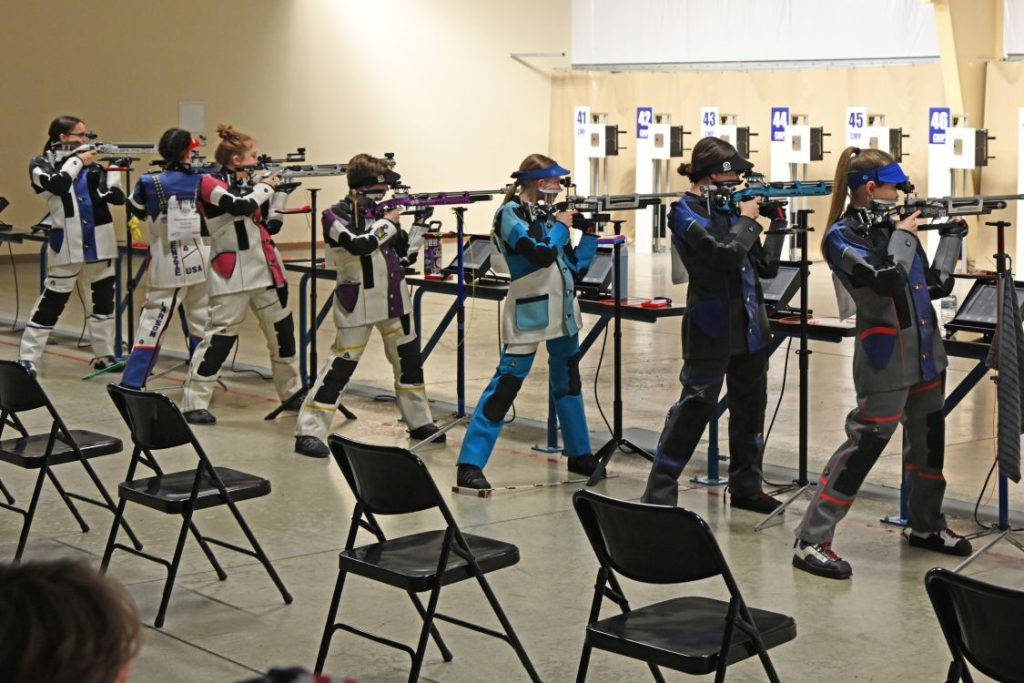
Spectator Possibilities. Finals take 30 to 45 minutes to run so in addition to being good training experiences for team members, they are short enough to offer excellent opportunities for involving spectators. Teams that conduct regular Practice Finals should think about the possibilities their finals offer for inviting visitors or spectators to view team members in action. A team might, for example, schedule regular Friday afternoon Practice Finals where they invite spectators to attend or watch on an Internet leaderboard.
Course of Fire. Teams’ and clubs’ Practice Finals should use the same final they expect to encounter in competitions. That would be the 24-shot One-Position Elimination Final that is standard for Air Rifle and Air Pistol events or the new 35-shot Three-Position Elimination Final that is being introduced in the 2026 ISSF Rules and 2026 CMP Rulebooks.
Targets. To do finals right, decimal scoring must be used. Some Junior programs have struggled with trying to conduct finals on paper targets, but they have pretty much given up on doing that. To conduct finals, it really is necessary to have electronic targets, but fortunately today there are already 400 Junior programs in the USA that have electronic target installations capable of hosting 10m finals. Electronic targets come with software that facilitates the conduct of finals and the display of results. Orion* software, which is used by the vast majority of Junior programs, also provides a state-of-the-art leaderboard that allows friends, family and interested persons in the community to watch your finals.
Squadding. Finals normally have spaces for eight competitors (in a competition, they are the top eight in a qualification event). Clubs or teams may squad eight athletes or they may squad as few as three and as many as a dozen athletes in Practice Finals. If more than eight start a final the additional athletes will be eliminated when the 8th place athlete is eliminated.
BEST CENTER-SHOT CONTESTS
The nation of Germany has more shooting clubs than any other country in the world. There are over 15,000 local shooting clubs in Germany: that’s one shooting club for every 5,500 people. Virtually every one of these clubs has a Junior Leader (Jugend Leiter) and offers a full program of activities that appeal to youth. The most popular activities in these shooting clubs are what the Germans call traditional “Prize Shoots” (Preisschiessen or Schützenfeste). The shooting events featured in these Prize Shoots or Festivals are Best Center-Shot contests.
In Best Center Shot contests, competitors fire single shots or series of perhaps three or five shots. Participants are ranked according to how close their shots are to the target center. Since the Middle Ages, German and Central European shooting clubs have featured Best Center-Shot contests in shooting festivals (Schützenfeste) and annual Shooting King and Queen (Schützenkönig, Schützenkönigin) competitions. In a typical Shooting King contest, all the men in the club shoot one shot on a specially designated target. The Shooting King is the one whose shot measures closest to the center.
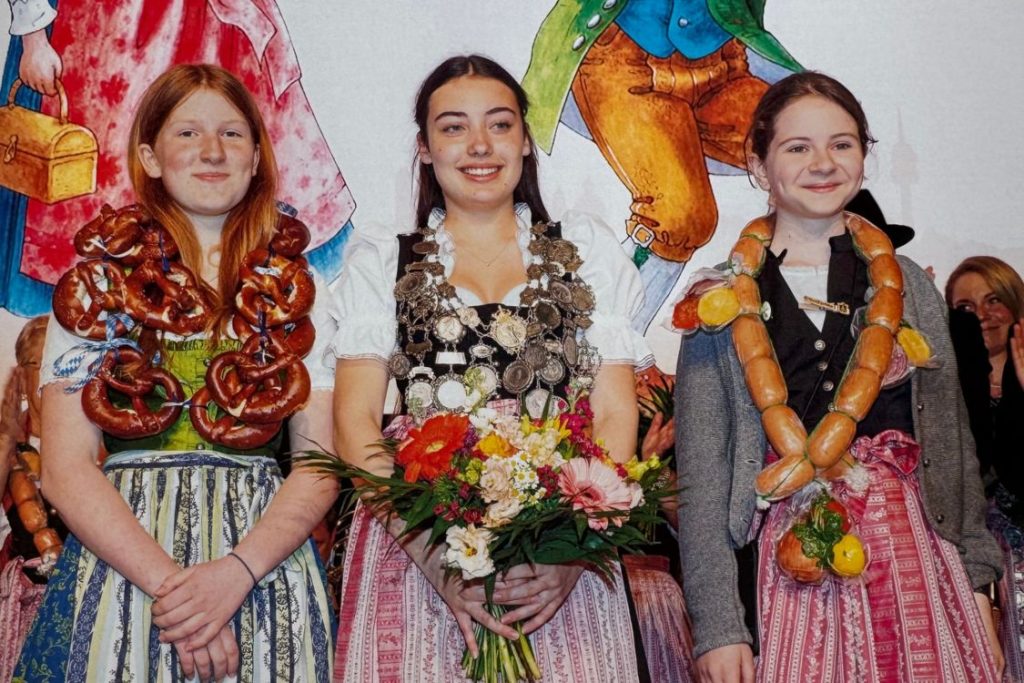
Firing a winning center shot requires skill to make a precise center shot, but it also requires a great deal of luck to have a shot fall near the exact center of the target. It is this combination of skill and luck that makes Best Center-Shot events popular in the areas where they are practiced. This popularity is backed by a tradition that goes back to the first shooting clubs that became active in the 12th, 13th and 14th centuries. The best shooters have better chances to have good center-shots, but everyone who participates has the possibility of firing one great center-shot. Here are some basic rules for conducting Best Center-Shot contests:
Course of Fire. Best Center-Shot events may be either a) one-shot events, b) events limited to a small number of shots (i.e., 3, 5 or 10 shots, with only the best center shot being measured), c) events with limited or unlimited reentries, or d) events where a designated shot or shots in a regular competition also is measured for a center-shot contest. They may be fired with either air rifles or air pistols. The regular standing position is most frequently used although many public-oriented programs have participants shoot from supported rests on benches or tables.
Targets. Regular 10m Air Rifle or Air Pistol targets are used. Event sponsors may use either electronic targets or paper targets that are scored with Scopos Orion software (see “Scoring” below).
Scoring. Shots are measured and ranked according to the radial distance of the shot center from the target center (R). A smaller radial distance ranks higher. All measurements must be made in hundredths of a millimeter. If electronic targets are used, the radial distance of a shot from the target center (R) is available in the shot display or system software. If paper targets are used, Scopos Orion software is the only commercially available scoring system that provides precise radial distances for each shot.
BENCH REST AIR RIFLE
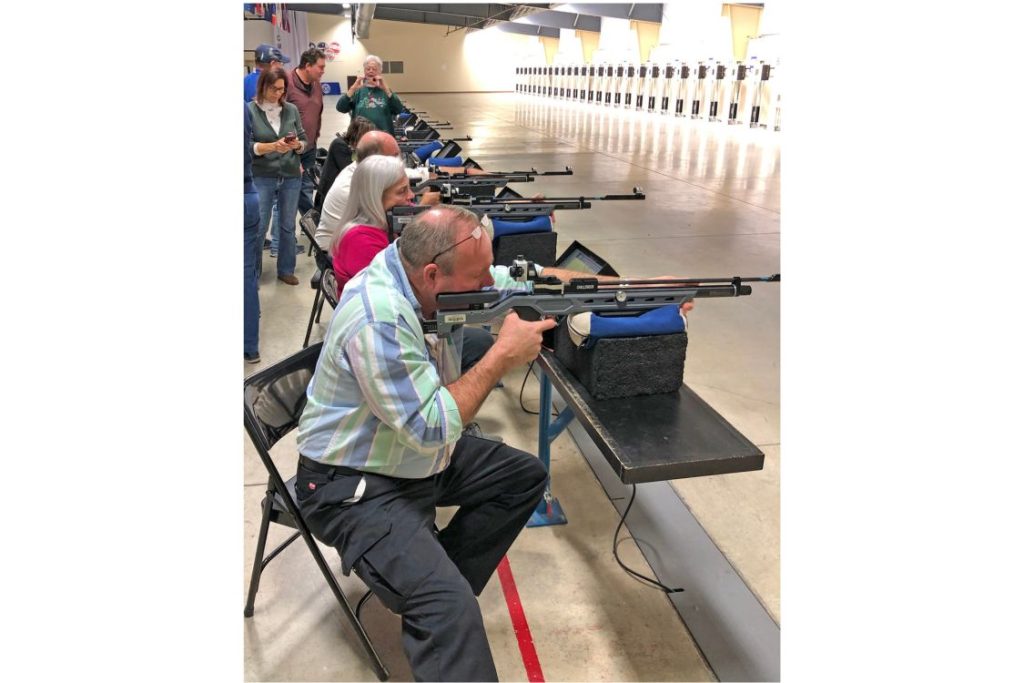
In Bench Rest Air Rifle, participants shoot while seated in a chair as they fire an air rifle (or air pistol) that rests on a bench or table. The airgun is supported with a rest, sandbag or kneeling roll that is placed under the rifle fore-end (or pistol grip) while competitors aim and fire. Bench rest Air Rifle has become popular at the CMP Competition Centers with many older, recreation-oriented shooters. Lots of Junior programs use shooting off a bench or table to start new shooters. Several shooting clubs use Bench Rest Air Rifle as fund raisers or to introduce community members to their programs. Persons with no previous marksmanship or competitive shooting experience can quickly learn proper sight picture and how to hold their bodies still while aiming and firing precise shots. This is an ideal Shooting game to use with seniors or new shooters to quickly introduce them to basic marksmanship concepts. Here are some keys to conducting this event:
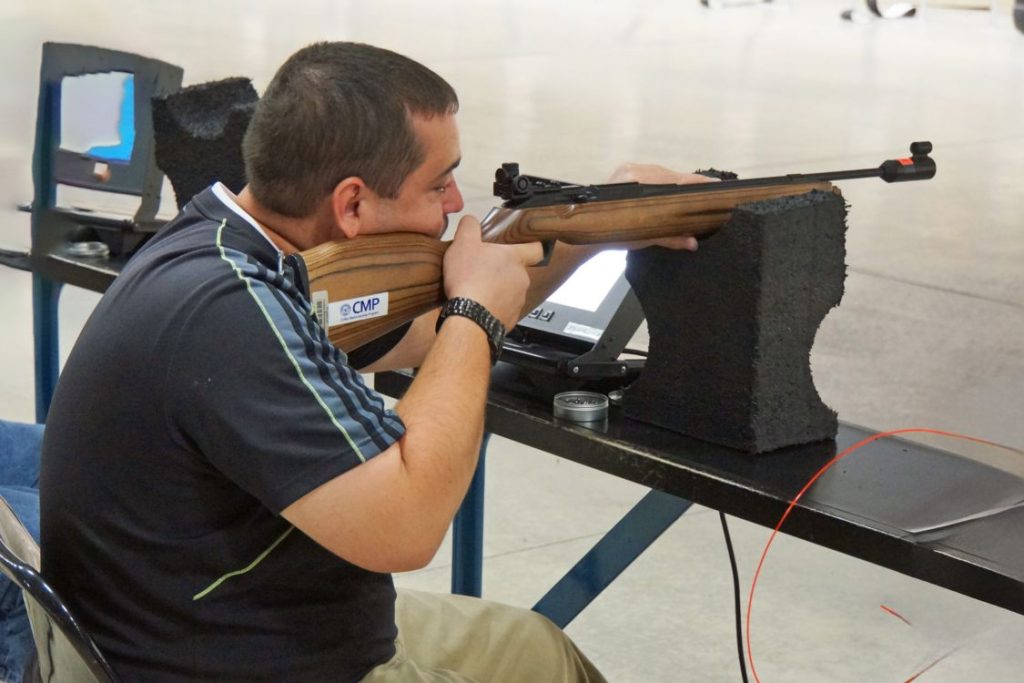
Firing Position. The firing position illustration abover shows a typical bench rest position. The competitor sits in a chair or stool, rests the rifle (or pistol) fore-end on a rest that is placed on a table or bench. In the position shown, the competitor is allowed to place one hand on the rifle but may not place either elbow on the bench or table. An alternative bench rest position allows competitors to rest one or both elbows on the table or bench. This alternative is the steadier of the two bench position variations.
Course of Fire. The course of fire used in this Shooting game varies according to the purpose of the activity. New Juniors may shoot five-shot groups with coaching interludes between shot groups. Recreation oriented or Senior shooters typically shoot 20 or 30-shot series with total scores being recorded. Competitors may be allowed to shoot Sighting shots before starting Match shots. As an alternative, Bench Rest Air Rifle events are often conducted informally with no time limits and no scores being kept.
Air Rifle. Bench Rest Air Gun may be shot with either Precision or Sporter Class Air Rifles. When offering a Bench Rest Air Rifle event for the public, sponsoring organizations should expect to provide air rifles and pellets for participants.
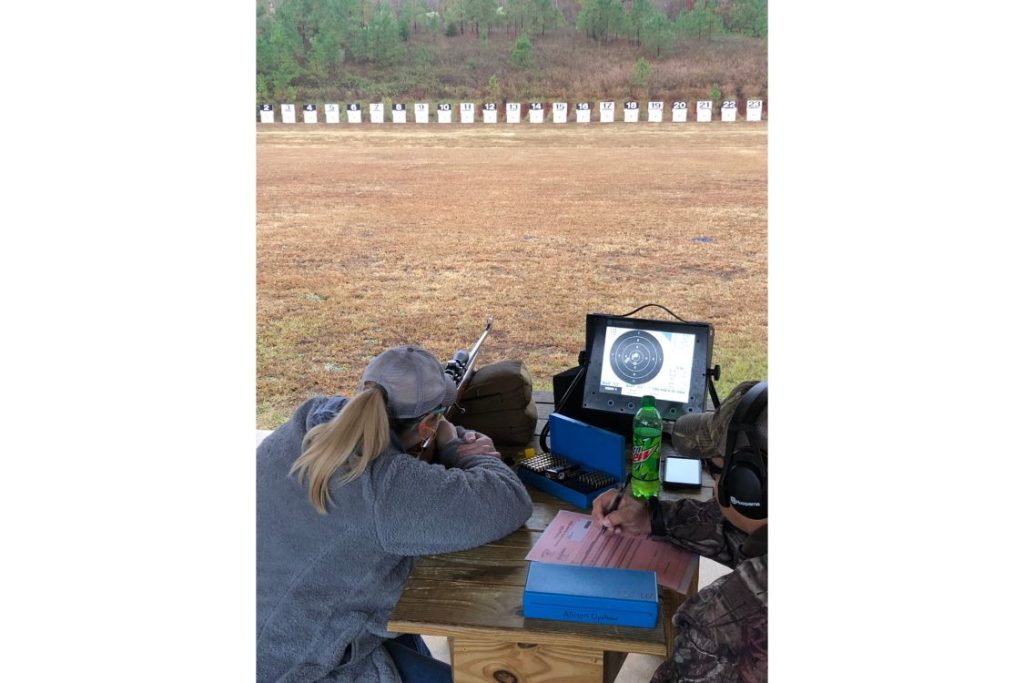
Targets. The 10 m air rifle target is normally used. Some Bench Rest Air Rifle events may use the Highpower Rifle SR or MR targets that are reduced for air rifle firing at 10 m. Targets can be ordered from the CMP E-Store: https://shop.thecmp.org/browse/Shooting?f=Equipment. If the club or team has electronic targets that is ideal because they give immediate feedback after each shot and do not require target changing.
Scoring. Depending upon the skill level of participants, targets may be scored in whole number (integer) or decimal (tenth ring) values. Producing ranked results lists is facilitated by using a match management system like Scopos Orion (https://scopos.tech/pages/orion).
AIR RIFLE TARGET SPRINT
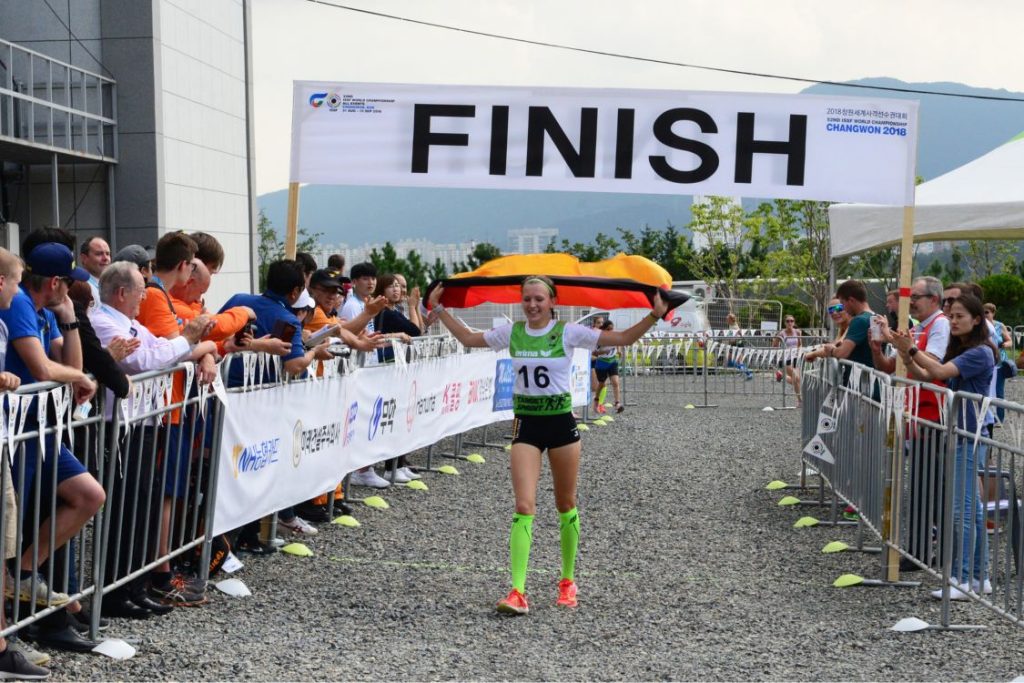
Target Sprint is a relatively new international shooting sports game. It has origins in the popular winter sport of Biathlon that combines cross-country skiing and rimfire rifle shooting. Biathlon inspired the creation of Summer Biathlon with running and rimfire rifle shooting. That in turn inspired the creation of Target Sprint which combines running and air rifle shooting. The ISSF introduced Target Sprint in 2013 and today governs and promotes it. There is no national organization in the USA that promotes and supports Target Sprint but there are local and regional organizations that conduct Target Sprint events. The CMP, for example, organizes occasional Target Sprint events at Talladega Marksmanship Park.
Target Sprint combines Air Rifle shooting and middle-distance running. There are both individual and team events. At the international level there are four categories: men, men junior, women and women junior. National and local competitions may offer additional competitor categories for younger Juniors (U18, U15) and Senior I (ages 46-55) and Senior II (ages 56 and older).
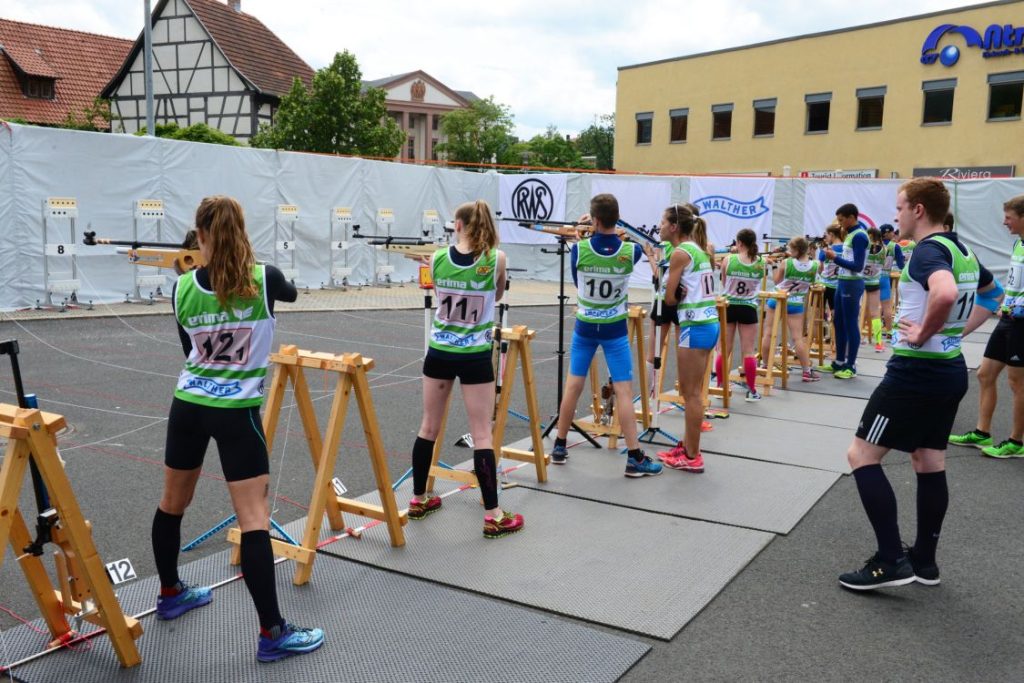
In the standard Target Sprint event, athletes run three 400 m loops that start and end at a 10 m Air Rifle shooting range. Rifles are placed in gun racks at the range while athletes run. After running the first loop, athletes pick up their rifles and go to their assigned firing points to shoot their targets. Targets have five hit/miss knock-down plates. Athletes cannot start running again until all five targets are hit. Athletes have a maximum of 15 shots to hit the five targets. If after 15 shots, all targets are not hit, the athlete must wait 15 seconds in a penalty box for each missed target. After the first shooting series, athletes run another 400 m loop and then shoot a second series of five shots. After hitting all five targets (or after serving penalties for missed targets) athletes run a third 400 m loop to the finish line. Athlete rankings are determined by the total time it takes for them to complete the event.
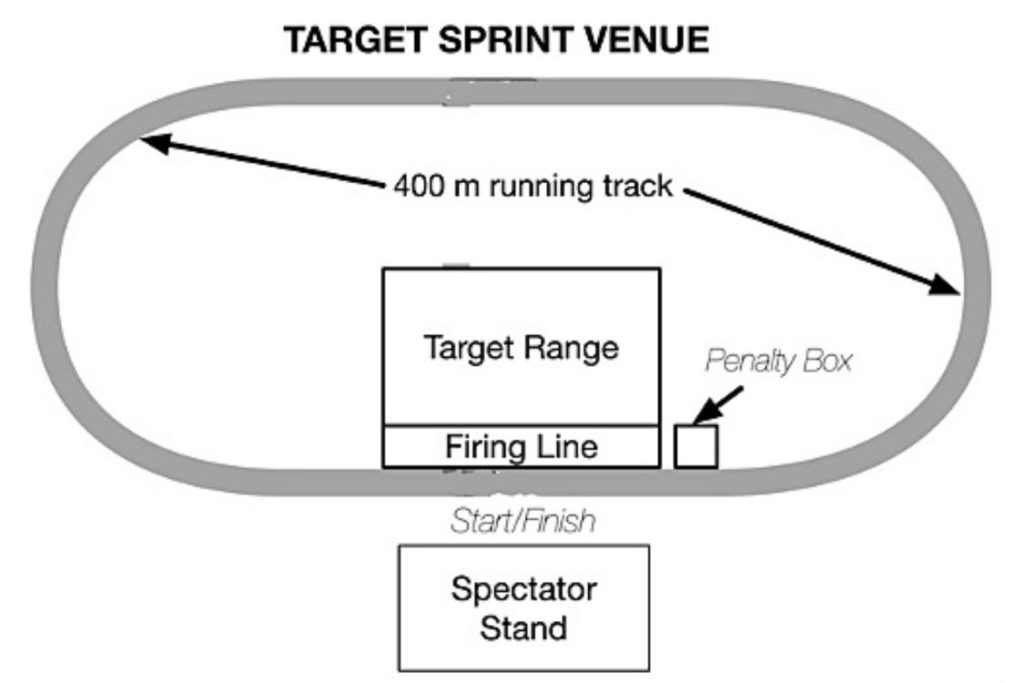
Target Sprint Course Layout. Target Sprint course layouts must combine a 400 m running track and a 10 m shooting range that has direct access to the running track. The Target Sprint Venue diagram (on left) shows a model course layout where the target range and spectator stand are located at the start and finish point on the track. The track does not need to be a regulation track, but it does need to be safe and smooth and 400 m long. If the target range is inside the track, it must have a backstop large enough to catch stray pellets.
Air Rifles. ISSF rules call for standard precision single loader air rifles. Local Target Sprint organizers should consider using one or two categories for precision or sporter class air rifles. The choice may depend upon which air rifles are most commonly available at a particular site.
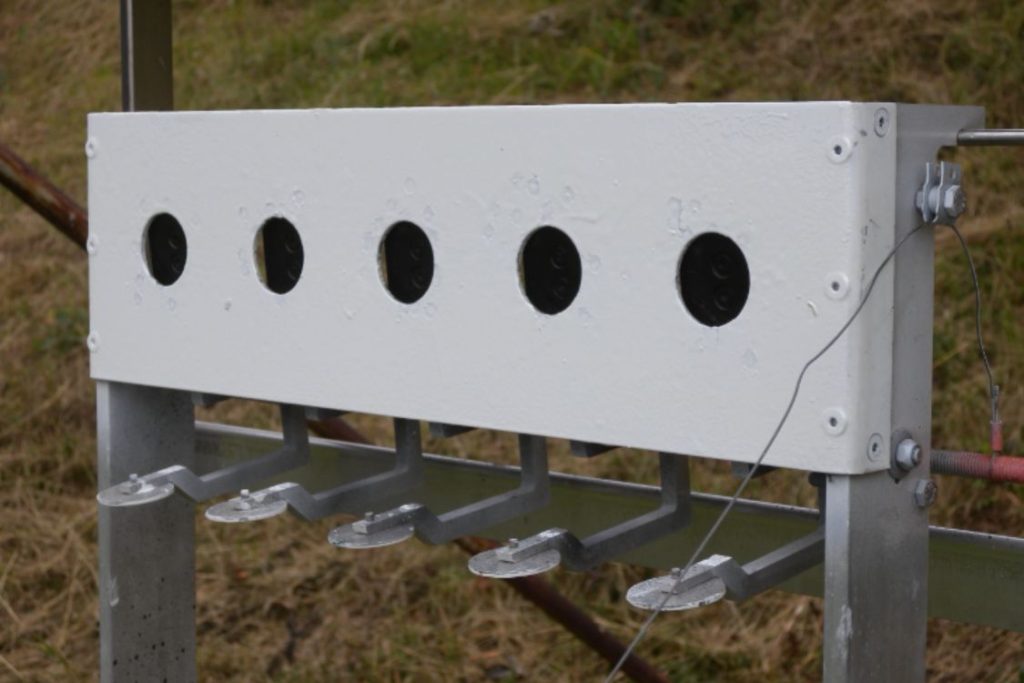
Targets. The knock-down targets used in Target Sprint make it a visually-attractive spectator event. The black knock-down plates sit behind 35mm openings, which are slightly larger than the standard 10m rifle target’s aiming black (4-ring is 30.5mm in diameter). When the target is hit a white paddle swings up to cover the target. After an athlete hits all five targets and begins another running lap, a pull cord is used to reset the targets for the next shooting series. Targets should be mounted so target height is 1.40 m ± 0.10 m. In the USA, legal Target Sprint targets may be purchased from Devin Manufacturing (Model BT-100, current price is $199.95, http://devinmanufacturing.com/targets1.html).
Shooting Positions. Athletes fire in unsupported standing positions. As an alternative, events for new shooters may allow them to fire from a supported standing position. Younger juniors may be allowed to fire from supported prone positions. In this case, targets must be mounted at a lower height (0.35 m ± 0.05 m).
Official Rules for ISSF Target Sprint Competitions. Official international Target Sprint Rules are now published in the ISSF Rule Book 2026 (See Section 11, at the end of the rulebook). You can download the ISSF 2026 Rules at https://www.issf-sports.org/rules
Range Equipment. Ranges may have one common rifle rack located at the entrance to the shooting range or individual rifle racks located on each firing point. Each firing point should also have a loading stand approximately 1.0 m in height.
Athlete Clothing. Special shooting clothing is not allowed. Normal athletic shoes-shorts-shirts etc. must be worn.
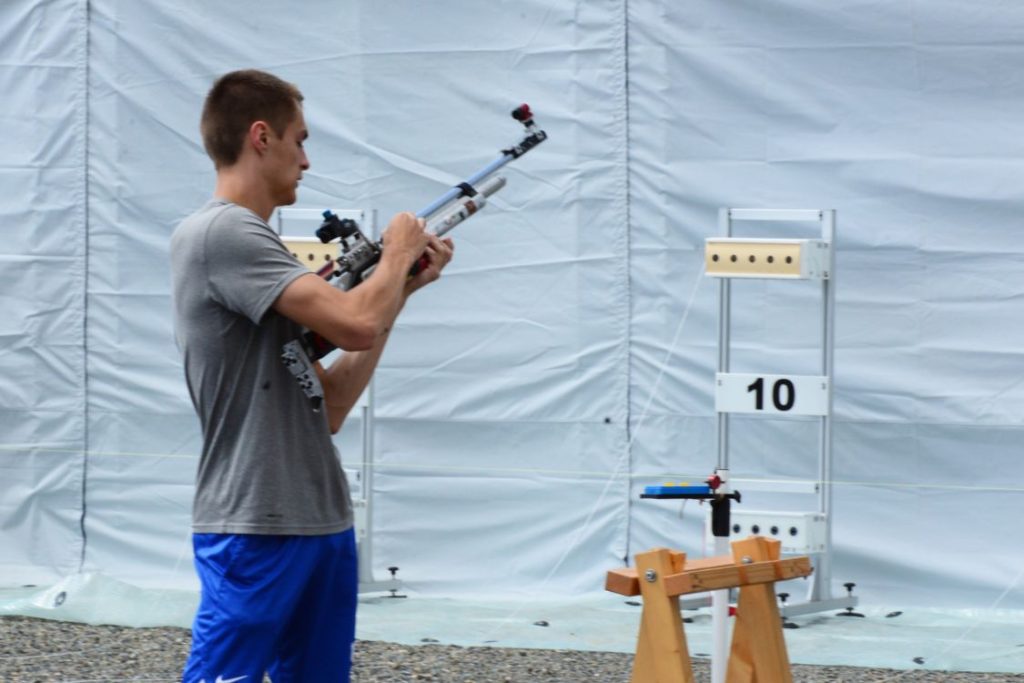
Event Organization. Competing athletes should be squadded to race in relays according to their sex and age group categories. If there are more entries in a category than can be squadded in one relay, qualification relays followed by a final for the best qualifiers may be conducted. Before each relay starts a race, athletes in that relay should be allowed to bring their rifles to the range for a brief Sighting time.
Range Safety. A Range Officer must always be present on the target range. All rifles carried on the Target Sprint venue must have open actions with safety flags inserted. Safety flags may only be removed after rifles are on a firing point.
League Shooting
League shooting is a competition format for teams and team members that deserves far more attention than it currently receives. In league shooting, a group of teams or clubs shoot against other league teams in a series of one-against-one team contests. Teams may consist of two, three, four or the best four of five team members, depending upon the league rules. “Mixed Teams” must have one female and one male members. In a League, teams compete against each other with the team firing the highest total score winning the match. After each team in the league competes against each of the league’s other teams, the team with the best won-lost record becomes the league champion. League matches can be live competitions where teams travel to opponents’ ranges, or they can be virtual matches where each team shoots on their home range and scores are compared via the Internet. Software to facilitate virtual leagues is available via Scopos Rezults website.
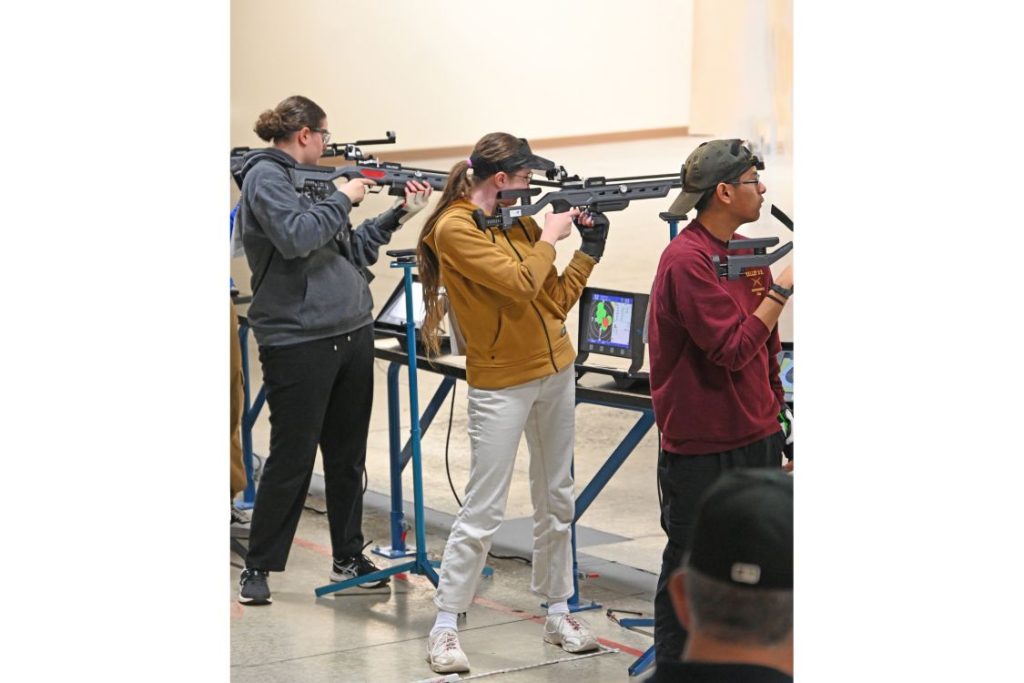
Perhaps the most successful Shooting league in the world so far has been the German Bundesliga. It is governed by the German Shooting Federation (Deutsche Schützenbund). Hundreds of Shooting clubs enter teams in the Bundesliga and are placed in league competition levels commensurate with their ability. With 15,000 Shooting clubs and short travel distances, organizing all those participating teams into leagues of like ability has resulted in an impressive mass competition structure. Bundesliga competitions start in October and end in February. Bundesliga matches are shot on electronic targets that make spectator attendance possible. Some of those matches now draw over 1,000 noisy, exuberant spectators.
In the USA where travel distances are much greater and shooting clubs fewer, the major league program has been the virtual leagues offered by Scopos Orion (https://rezults.scopos.tech/national-leagues/). There are National Sporter and Precision Air Rifle Leagues that compete in the fall, with teams being assigned to leagues of like ability. Last fall 170 teams competed in those leagues. This Winter there are 68 New Shooter Teams (with 500 Juniors that started shooting during the current school year) competing in the National New Shooter League. There are additional Scopos leagues for Intercollegiate club and pistol teams.
The CMP also offers a selection of League Matches for shooting disciplines promoted by the CMP. Information on those league programs is available at https://thecmp.org/competitions/cmp-league-matches-2/.
League competitions can play a vital role in developing athletes for major competitions that take place later in the competition year because they offer multiple competitions with little or no travel time. Teams and clubs that are looking for regular competitions have the option of forming a league in their area where travel distances allow for shoulder-to-shoulder team matches. For most teams in the USA, joining or forming a virtual league is the most practical option.
Air Gun Shooting Games for Fun and Variety. The Air Gun Games we’ve described here are not events to replace your program’s foundational events, 60-Shot Air Rifle or Air Pistol events or school age Three-Position Air Rifle, but they are events that can add fun, variety and new Shooting Sports experiences to team and club programs. Here’s hoping your team or club will seriously consider making one or more of these events part of your annual program.
* Disclosure: Dr. Erik Anderson, who is the owner and chief architect of the Scopos firm’s Orion and Rezults software, is the son of the author Gary Anderson.