Terry Pitts
YULEE, FLORIDA
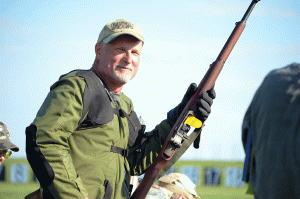
State Director Info
Background
Awards
- Silver medal in National Trophy Match in 2000
- 2008 Ohio State Long Range Service Rifle Team Champions
- 2009 Ohio State Long Range Service Rifle State Champion
- First place, multiple Ohio club championships in highpower and 300‐yard competitions
- Coach, captain and participant in NRA National Championships of Ohio Long Range Service Rifle team with awards for first place sharpshooter team, second place expert team, first place master team
- Multiple third‐ to fifth‐place finishes in NRA National Long Range Service Rifle Matches
Personal Info
Reasons
Goals/Hopes
From Mentored to Mentors: Mariner Coaches Pay Championship Lessons Forward
Submitted by Bryan F. Williams, Coach, Mariner Leadership Academy (JROTC)
A culture of mentorship helped build Mariner’s championship program. Now its coaches are working to multiply that investment across junior marksmanship.
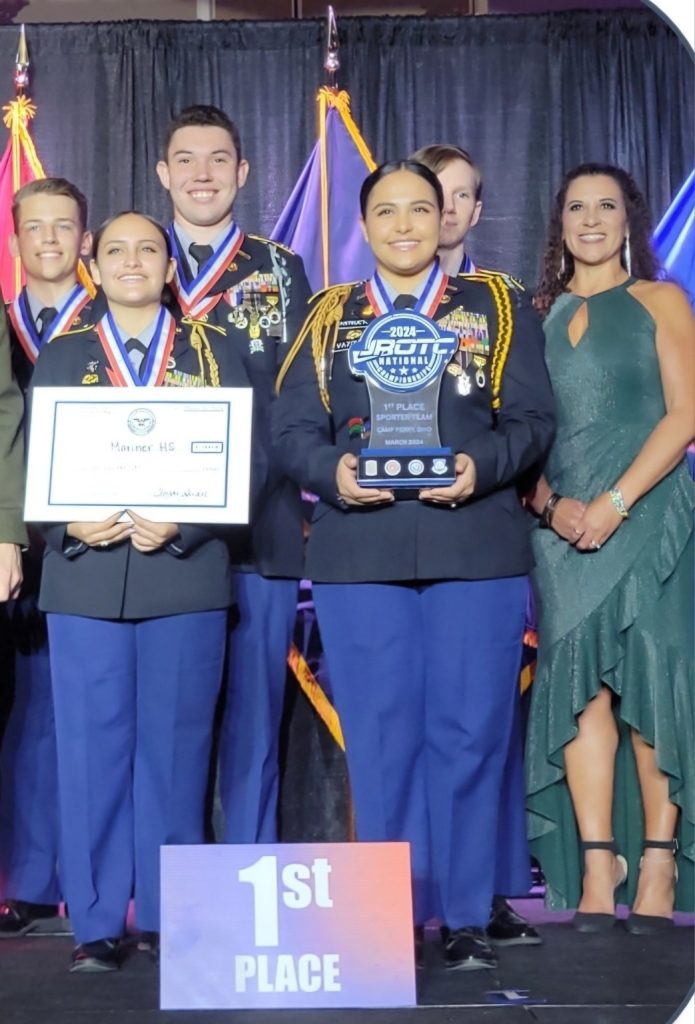
Coach Marybeth Williams joins members of the Mariner High School JROTC air rifle team after capturing the 2024 JROTC National Sporter Air Rifle Championship.
Before Mariner High School became a JROTC National Champion, before the state championships and national titles, and before coaches began traveling to Southwest Florida to attend its annual Army Marksmanship Unit Coaching Clinic, Major (Ret.) Bryan Williams and Coach Marybeth Williams were simply two coaches with an ambitious vision and a lot to learn.
They wanted to build a championship program.
Fortunately, some of the most successful coaches in junior marksmanship were willing to show them how.
That spirit of mentorship became part of the foundation of Mariner’s program. Years later, it is also helping shape what the Williamses hope will become part of their legacy: successful coaches helping the next generation of coaches build programs of their own.
Learning From Those Who Came Before
When the Williamses began developing Mariner’s program, they did not attempt to figure everything out alone.
One of their earliest mentors was SFC (Ret.) Riess Pellegrino, the longtime rifle coach at Sarasota Military Academy and a former state and national championship coach.
During Mariner’s first year, Pellegrino took the Williamses under his wing. He shared best practices, answered questions and invested significant time with the new coaches during their first regional and national-level competitions.
The lessons extended beyond shooting technique. The Williamses were learning how established programs trained, organized, developed athletes and created cultures capable of sustaining excellence.
Other championship programs followed Pellegrino’s example.
Former Ozark High School coach William Crawford and members of his national championship team spent time mentoring Mariner’s young athletes and coaches.
At Nation Ford High School, legendary coach Col. Sean Mulcahy shared training materials, files and ideas from a program that accumulated one of the most remarkable championship records in junior marksmanship.
Granbury High School coach Scott Casey, whose program became a dominant force in precision air rifle, shared best practices, encouragement and mentorship throughout Mariner’s development.
In Florida, Steve Beck of Mulberry High School, an Army service champion and multiple-time state championship coach, was another of Mariner’s earliest mentors, openly sharing lessons and practical advice that could help a developing program improve.
There was no requirement for any of them to do it. They were competitors. But they shared anyway. That made an impression.
A Championship Vision Takes Shape
Major and Coach Williams had envisioned building a championship-caliber program from the beginning. What they quickly discovered, however, was that championships rarely emerge from a single coaching philosophy or one breakthrough idea.
They are built through years of learning.
The Williamses borrowed ideas, asked questions, made mistakes, adapted systems and gradually developed a model that fit Mariner’s athletes and culture.
Eventually, the results followed.
Mariner captured the 2024 JROTC National Sporter Air Rifle Championship, becoming the top JROTC sporter team in the nation.
That championship became part of a larger run that has included multiple national championships and eight Florida state titles.
But something else had been developing alongside the trophies.
The Williamses remembered the coaches who had opened their notebooks, shared their training philosophies, answered their phone calls and stood beside them at matches when Mariner was still trying to figure out how championship programs operated.
The question became: How could Mariner do the same for others?
Their answer was not simply to mentor another team. They wanted to scale mentorship.
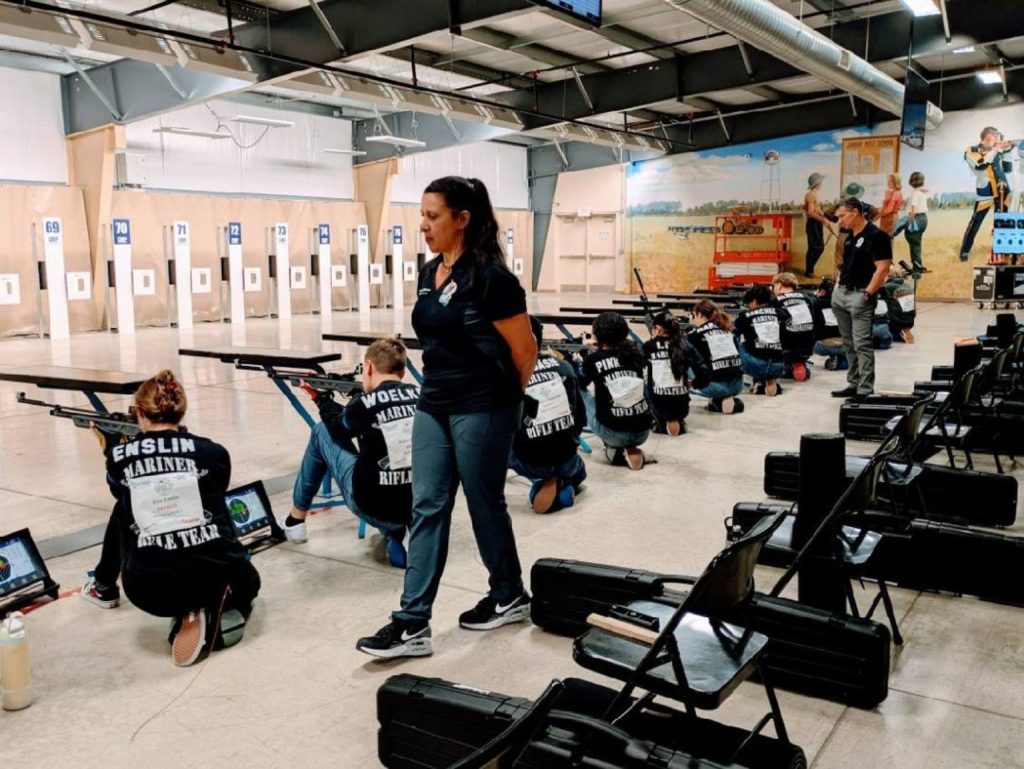
Head Coach Marybeth Williams works the firing line with Mariner athletes during national competition. Williams’ emphasis on deliberate training, athlete development and championship culture has helped transform Mariner into one of the nation’s most successful JROTC air rifle programs.
Taking Mentorship to Another Level
Four years ago, Coach Marybeth Williams and retired Sgt. 1st Class George Norton helped launch what became the Army Marksmanship Unit Coaching Clinic at Mariner High School.
The idea was simple: bring coaches together and give them access to exceptional instruction, proven practices and one another.
Rather than forcing developing coaches to learn everything through trial and error, create an environment where knowledge could be deliberately passed from experienced marksmen and successful coaches to the people responsible for developing the next generation of athletes.
The clinic has now reached well beyond Southwest Florida. Coaches from five states have traveled to Mariner to participate.
This year’s clinic brought together 18 coaches and 20 athletes, continuing a four-year effort to develop not only better shooters, but better coaches.
That distinction is important. An athlete who receives excellent instruction benefits individually. A coach who receives excellent instruction may return home and influence dozens of athletes over the next several years.
The Williamses see that multiplier effect as one of the most powerful ways established programs can strengthen junior marksmanship.
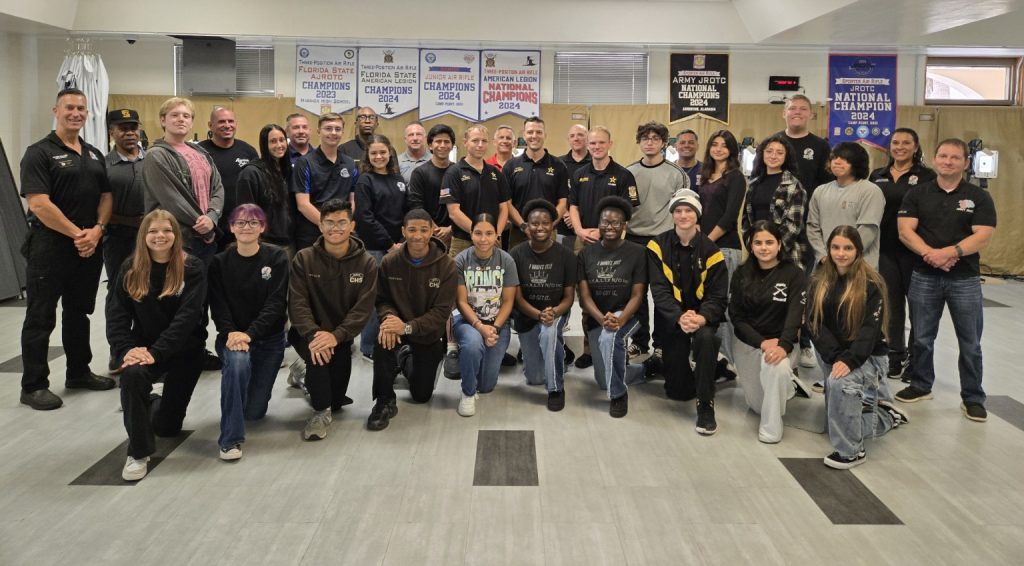
Coaches and athletes gather at Mariner High School for the 2026 U.S. Army Marksmanship Unit Coaching Clinic, part of Mariner’s continuing effort to expand high-level coaching education and mentorship.
Coaches Developing Coaches
The clinic also reflects an evolution in the Williamses’ own philosophy.
Their early goal was straightforward: build a championship program at Mariner. Today, their vision is broader.
Winning still matters. Mariner’s athletes train to compete at the highest level, and the standards inside the program remain demanding. But championships have also given the program a platform.
Two years ago, Major and Coach Williams presented their Building a Championship Program message to Army JROTC instructors during the U.S. Army Cadet Command 6th Brigade Florida Summer Workshop.
Their message went beyond marksmanship technique. They discussed the organizational elements that allow youth programs to succeed over time – vision, culture, standards, leadership, athlete development, training systems and the deliberate development of young people.
It was another opportunity to take lessons accumulated through years of mentorship, experimentation and competition and put them into the hands of other leaders.
The Williamses see the AMU Coaching Clinic as an even larger expression of that responsibility.
“We didn’t build this program by ourselves,” Major Williams said. “Some very successful coaches gave us their time when there was absolutely nothing in it for them. They opened their programs to us, shared what worked and helped us avoid mistakes they had already learned from. That changed our trajectory.”
It also established an expectation.
“When people invest in you like that, eventually you have an obligation to turn around and invest in somebody else.”
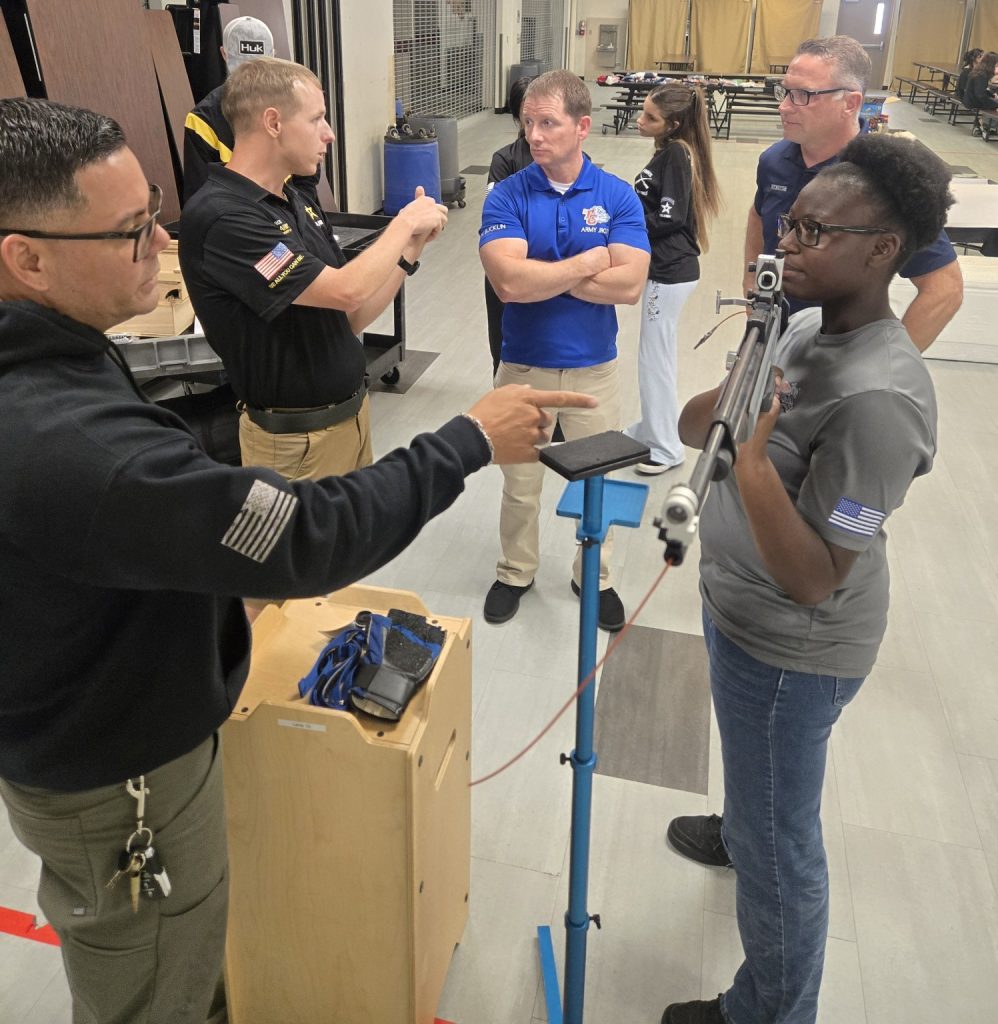
Coaches work alongside athletes during the AMU Coaching Clinic, immediately applying techniques and concepts shared by Army Marksmanship Unit instructors.
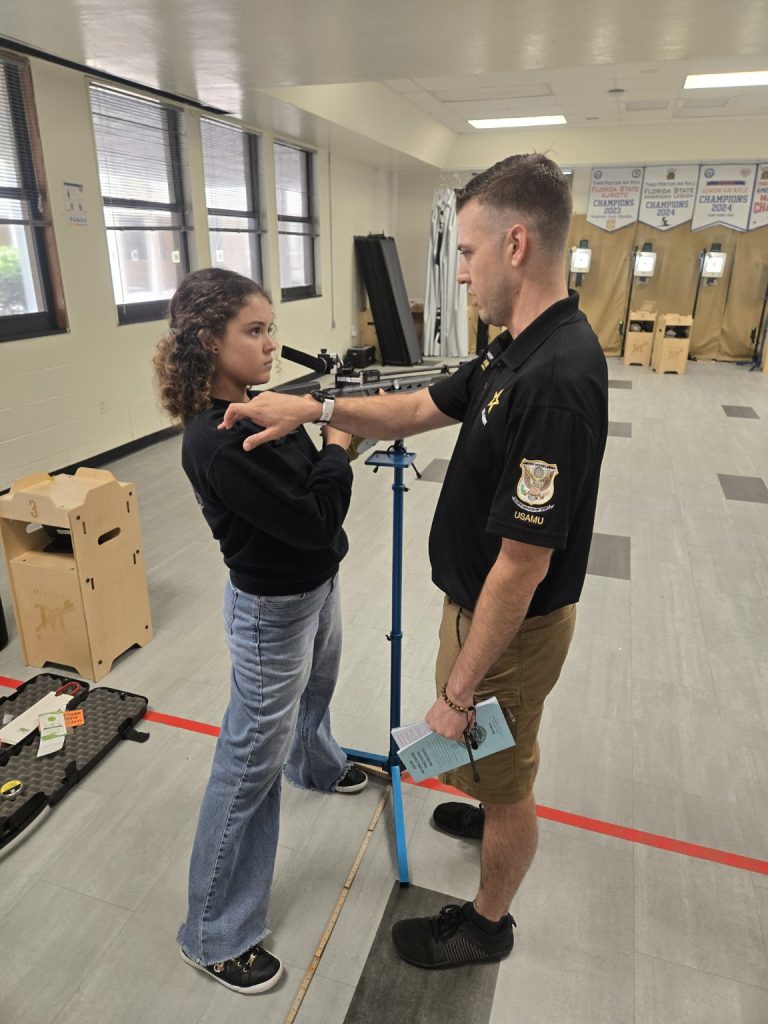
U.S. Army Marksmanship Unit shooter SSG Tim Sherry works one-on-one with a junior athlete, demonstrating coaching techniques participants can take back to their own programs.
Creating More Opportunities
The coaching clinic is not Mariner’s only effort to expand access to high-level development.
This summer, the school also hosted a Civilian Marksmanship Program Junior Rifle Camp. Registration filled almost immediately, demonstrating the demand for high-quality training opportunities for junior athletes in Florida.
Together, the CMP camp and AMU Coaching Clinic are helping establish Mariner as more than the home range of a successful JROTC rifle team. It is increasingly becoming a place where athletes and coaches come to learn.
That distinction matters to Coach Williams.
Marybeth Williams has served as the architect of much of Mariner’s competitive training program and culture. Her athletes have won at the highest levels of JROTC and junior marksmanship, but her influence increasingly extends beyond the athletes wearing Mariner colors.
Through clinics, camps, presentations and countless informal conversations at competitions, the Williamses are now doing for other coaches what Pellegrino, Crawford, Mulcahy, Casey, Beck and others once did for them.
They are opening the notebook.
The Championship Cycle
There is an irony in competitive shooting.
Teams spend countless hours preparing to defeat one another, yet some of the strongest programs in the sport have also been remarkably willing to help their competitors improve.
Mariner is a product of that culture.
The Williamses believe preserving it is essential to the future of junior marksmanship.
A coach shares an idea. Another coach adapts it. An athlete improves. A program grows. Eventually, that athlete or coach teaches someone else. And the cycle continues.
For Major and Coach Williams, that may ultimately be a more meaningful measure of success than another championship banner hanging inside Mariner High School.
Their program began with a vision of becoming champions. Along the way, mentors taught them something bigger:
Championship programs don’t just build winners. They build people who eventually help others win.
U.S. Army Marksmanship Unit Makes Huge Impact on Florida Coaches
Submitted by Maj. Bryan F. Williams, Mariner Leadership Academy
The U.S. Army Marksmanship Unit (USAMU) has a storied history of producing the world’s greatest shooting-champion athletes. What is sometimes overlooked is their tremendous ability to train coaches and mentor youth shooting programs. The expertise and experience of the USAMU’s members was showcased at Mariner High School in Cape Coral, Fla., for the first ever Florida air rifle coaching clinic, where 26 coaches and over 20 high performing JROTC cadet athletes participated.
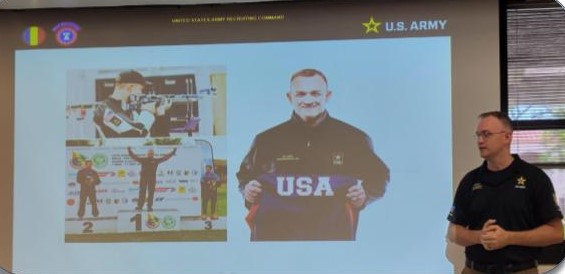
When Mariner High School coach Marybeth Williams approached the USAMU’s Sgt. 1st Class George Norton at the USAMU-hosted Youth Air Rifle 3-P Championship at Fort Benning, Ga., her initial goal was to connect a couple of her top athletes as perspective USAMU soldiers. However, after picking Norton’s brain for coaching advice, she had an epiphany!
“My husband and I have been working hard in our first four years of coaching to build a network of mentors. It occurred to me what an enormous opportunity it would be to have the talent of the (US)AMU help us with a ‘train the trainer’ type event,” Coach Williams explained.
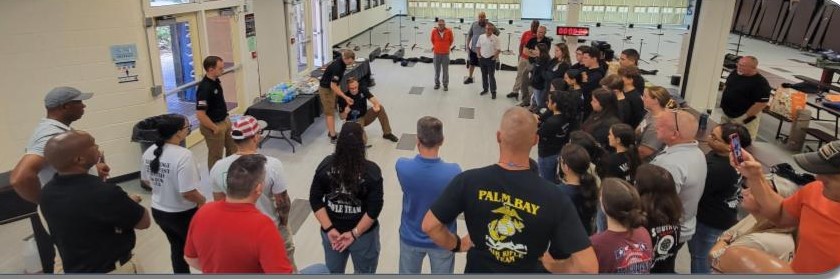
She and her husband Maj. Bryan Williams (Mariner High School Army JROTC Senior Army instructor and marksmanship coach) quickly established a relationship with Norton and collaborated on a coaching clinic concept.
Their idea grew legs and was fully supported by the U.S. Army Cadet Command’s 6th Brigade JROTC Director, Robert Hyver, and the USAMU Commander, Lt. Col. Casey Mills.
Hyver said, “Marksmanship is a JROTC co-curricular activity that directly connects our cadets with college and scholarships. This was a no-brainer to get behind and support our JROTC instructor coaches across the state of Florida.”
Norton and the Williams team built a clinic agenda that not only focused on shooting drills and techniques but placed a heavy emphasis on designing a complete program focused on advising coaches and athletes about opportunities after high school.
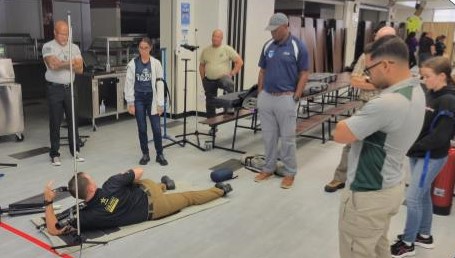
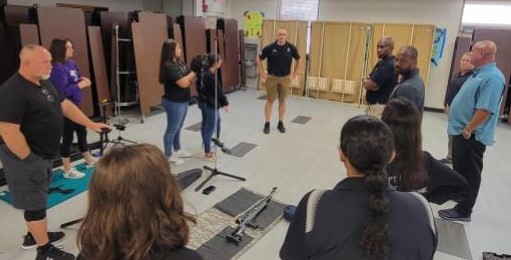
Norton, a former international champion and American record holder, has always had a passion for instructing youth – particularly JROTC Cadets. As a product of the St. Johns Military School JROTC program, Norton said, “I think the most powerful testimony of my success in shooting and in life is the influence my JROTC instructor, Master Sgt. Tony Blair, had on me. JROTC gave me purpose and a direction for my life. Master Sgt. Blair taught me how to be disciplined and the type of commitment that was necessary to achieve my goals and excellence in everything I tried. I owe him everything for the man I’ve become. I’ve always wanted to put some type of clinic or training seminar together that would give back to the JROTC community.”
After only a few short months of planning, the Williams team and Norton put together an aggressive training agenda and quickly put the word out about the clinic across the state of Florida.
Maj. Williams reported, “The (US)AMU definitely led the clinic, however one of the greatest outcomes of putting over 25 coaches in a room together was building a coaching network and sharing best practices with one another. We talked about fundraising ideas, equipment maintenance, incentive and awards programs and scholarship opportunities. There was an enormous amount of information shared. We plan to repeat this event!”
With a heavy emphasis on building programs that provide opportunities for athletes after high school, there were other guest speakers on hand. The Florida State American Legion and local Post 90 gave presentations about the Legion’s Marksmanship Junior Shooting Sports Program and other scholarship opportunities.
The five Cape Coral High Schools, in collaboration with their local American Legion Post, designed a round robin tournament in 2014 called the “King of the Cape.” During the event, the five teams compete shoulder to shoulder, rotating the host school each week. At the end of each weekly match, the host team provides a meal and certificates for the top performers. At the end of the five-week competition, the winning team is presented the prestigious King of the Cape cup and has their named engraved on the trophy.
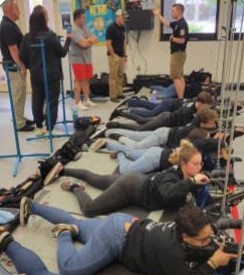
“Cadets all over our school district know about this tournament. It is definitely one of our top goals each year to win back the cup!” said Mariners team captain Eryka Vazquez. “All of the cadets earn a special American Legion ribbon for their uniform, but the best part is making friends with cadets from all the other teams.”
Numerous coaches attending the clinic reported they were motivated to improve collaboration with their local posts. Additionally, several Florida ROTC programs sent their recruiting officers to connect with the cadet athletes at the clinic to educate and promote ROTC scholarship opportunities.
The Army National Guard recruiters also gave a presentation about scholarship opportunities and provided advice about building a well-rounded resume in high school.
“I was really impressed with how much information we were provided about college scholarships, whether it was with shooting or not,” said Mariner senior Leelend Hineman. “I definitely feel more confident and well-informed about my graduation plans.”
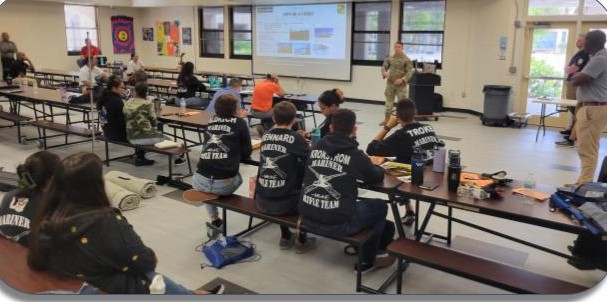
Norton was joined by Sgt. Jared Desrosiers and Staff Sgt. Brandon Muske, both highly accomplished soldier-athletes. The trio broke down the Florida coaches and JROTC cadet athletes into small groups for hands-on training and small group discussion.
Sgt. 1st Class Steve Gainey, East Lee High School, said, “This is my seventh year of coaching, and I learned more over the last 48 hours than my first six years combined! Having the (US)AMU team share their extraordinary experience and expertise is definitely going to be a game changer for my program. I can’t wait until the first day of practice with my team!”
The U.S. Army Marksmanship Unit’s presence expanded well beyond teaching and mentoring coaches and athletes. As a result of the USAMU’s influence, eight of the 20 cadet athletes participating in the clinic expressed serious interest in pursuing military careers and several, specifically, on setting the goal to join the elite U.S. Army Marksmanship Unit – this coming at a time when the Army’s recruiting mission has fallen well short for the past two years.
At the conclusion of the clinic, several cadets stayed afterwards to talk to Norton.
“I’m not only motivated to be a better shooter, I’m totally interested in becoming a member of the Army Marksmanship Unit,” said Cadet Nathan Krokstrom.
“All of the sergeants really helped me better understand the level of commitment and dedication I need to achieve excellence in my life,” asserted Cadet Tyler Dennard. “It was so cool how helpful and down-to-earth all of the sergeants were, taking the time to hang around after the clinic and talk to all of us cadets about our goals. I feel so much more confident now and I have set a goal of enlisting in the Army.”
While the train-the-trainer idea is nothing new, combining a coaching clinic concept with influencing young people to defend our nation is a novel concept.
“I am confident we’ve discovered a partnership and a model idea for other shooting communities to replicate,” said Maj. Williams. “The knowledge shared between the (US)AMU and other coaches was absolutely priceless. I’m excited to see the relationship grow between the (US)AMU and JROTC!”